
The practical home bar
The Five Glasses an Adult Home Bar Actually Needs
Build a useful home bar with five versatile glass shapes instead of a cabinet full of single-purpose pieces.
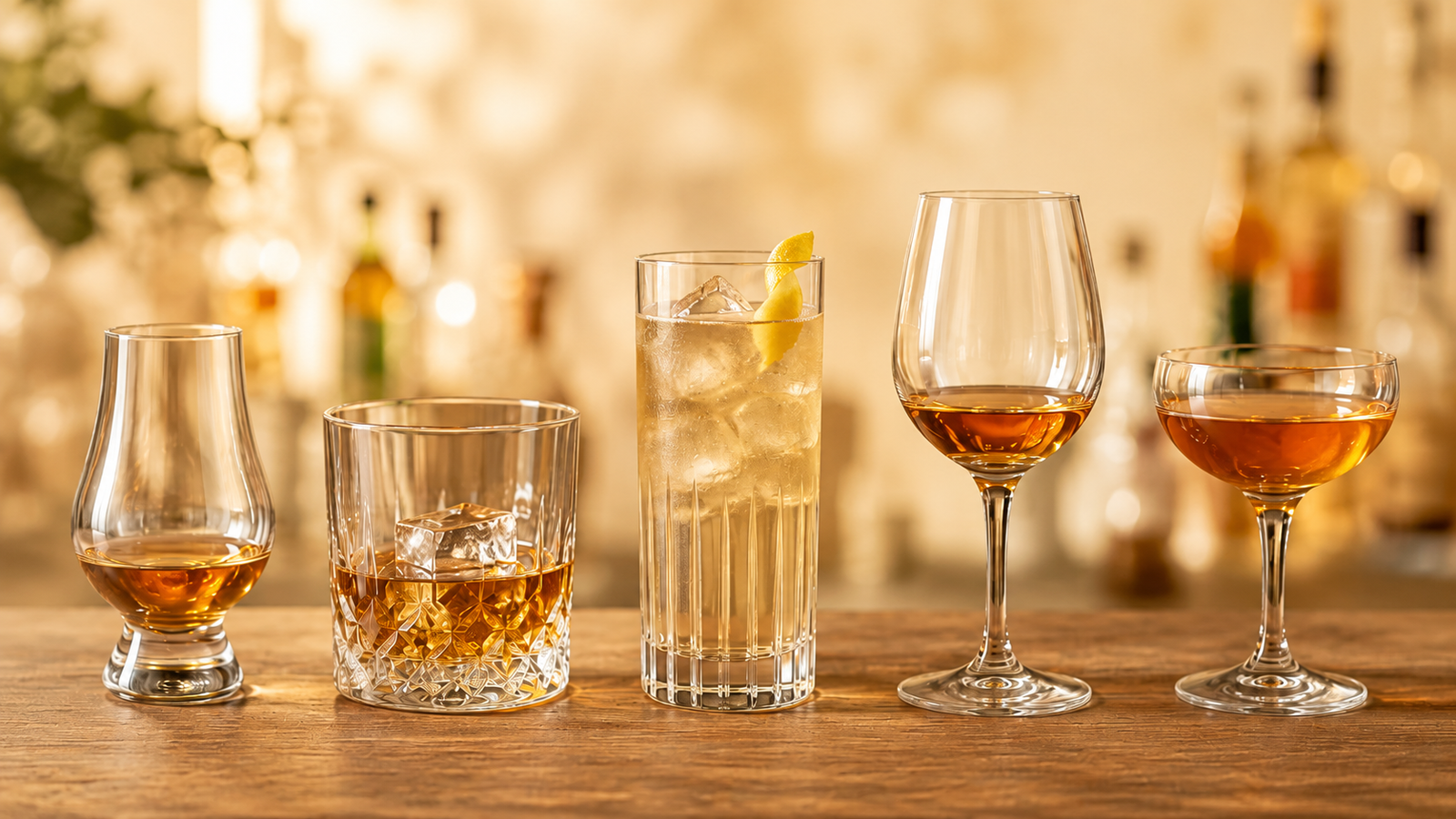
Five shapes, not fifty
A good home bar should make it easier to pour a drink, set a table and invite someone to stay awhile. It should not turn one cabinet into a museum of glasses that only work twice a year. Five useful shapes cover neat whiskey, ice, tall sparkling drinks, wine, spirit-forward cocktails and most celebratory pours.
Buy for the drinks you actually serve, favor pieces that are comfortable to hold and easy to replace, and begin with pairs or sets of four. Matching every glass in the house matters less than having enough of the right size for the people at the table.
1. The whiskey tasting glass
A whiskey tasting glass uses a rounded or tulip-shaped bowl and a narrower opening to gather aroma near the nose. It is particularly useful for neat whiskey, whiskey with a few drops of water and side-by-side comparisons where every pour should meet the same shape.
Look for a stable base, enough bowl space for a gentle swirl and an opening that is narrower than the widest part of the bowl. Lead-free crystal and ordinary glass can both work; clarity, balance and a comfortable rim are more important than ceremony.
A small white-wine glass is a sensible substitute. Most home bars do not need separate tasting glasses for bourbon, rye, Scotch and every other spirit. Two to four identical tasting glasses are a practical first purchase if neat pours are a regular part of the evening.
2. The double Old Fashioned or rocks glass
The rocks glass is the dependable short glass for an Old Fashioned, whiskey over one large piece of ice, a neat pour that wants more room and short zero-proof drinks. A double Old Fashioned generally gives the drink enough space without making a measured pour look lost.
Look for roughly 8 to 12 ounces of capacity, a base that sits securely and an opening wide enough for large ice. Weight can feel pleasant, but a very heavy base does not improve the drink and may make a full tray awkward.
A sturdy water or juice tumbler substitutes perfectly well. You do not need separate glasses labeled for an Old Fashioned, a Negroni and whiskey on the rocks. A set of four versatile rocks glasses earns its shelf space quickly.
3. The highball or Collins glass
A tall glass gives ice, spirit and a carbonated mixer room to stay in proportion. It handles whiskey highballs, Collins-style drinks, gin and tonic, Ranch Water, iced coffee, sparkling water and plenty of alcohol-free combinations.
Look for a straight or gently tapered shape in the neighborhood of 10 to 14 ounces. It should be easy to grip when cold, broad enough for ordinary ice and durable enough for regular washing. An extremely narrow glass can be frustrating to fill and clean.
A modest pint glass is the obvious substitute. Most homes do not need one set labeled highball and another labeled Collins; the useful difference is capacity, not the name on the box. Buy the height that fits your ice and your dishwasher.
4. The versatile wine glass
One clear, moderately sized stemmed wine glass can serve red, white and rosé wine, plus spritzes and the occasional beer that benefits from a little room. A gently tapered bowl keeps it flexible at the dinner table without asking everyone to study a grape chart.
Look for a bowl with room to swirl below the rim, a stable foot and a stem that feels balanced rather than fragile. A very large bowl can be handsome but cumbersome in a cabinet and at a crowded table.
A clean stemless wine glass or small water goblet can substitute. Most home bars do not need a separate shape for every grape variety. Start with four to six versatile glasses that you are willing to use on an ordinary night.
5. The coupe or Nick and Nora glass
A coupe or Nick and Nora is made for cocktails served up—that is, chilled and strained without ice in the glass. Either handles a Manhattan, Daiquiri, Sidecar and celebratory sparkling pour with more composure than an oversized V-shaped Martini glass.
Look for a capacity that suits the recipes you make, usually a smaller bowl rather than a banquet-sized one, plus a rim that feels comfortable and a stem and foot that balance when the glass is full. A Nick and Nora reduces the open surface area; a coupe brings a broader, more festive silhouette. Choose the one you enjoy handling.
A small wine glass is an honest substitute. Most homes do not need coupes, Nick and Noras and Martini glasses all at once. Buy one stemmed cocktail shape in pairs or fours and let it do several jobs.
What most home bars do not need
Skip any glass that only makes sense for a drink you never prepare. That often includes giant novelty goblets, branded promotional glassware, delicate shapes that cannot survive your normal washing routine and complete grape-specific wine suites. A dedicated beer glass or Champagne flute can be delightful when it supports a real habit, but neither is an entry requirement.
Avoid buying by photograph alone. Check capacity, height, rim diameter, care instructions and replacement availability. Measure the shelf and dishwasher before falling for a dramatic silhouette.
A practical buying order
Begin with rocks glasses and versatile wine glasses if you host meals and casual drinks. Add highballs next for tall mixed and zero-proof drinks. Buy tasting glasses when comparative whiskey nights become a habit, then choose a coupe or Nick and Nora when you regularly shake or stir cocktails served without ice.
The goal is not to complete a collection. It is to have a clean, appropriate glass ready for the drink and the person in front of you.