
Glassware, explained
Glencairn vs. Tumbler: Choosing the Right Whiskey Glass
A practical comparison of a tulip-shaped tasting glass and a tumbler for neat pours, water, ice, comparison and casual drinking.
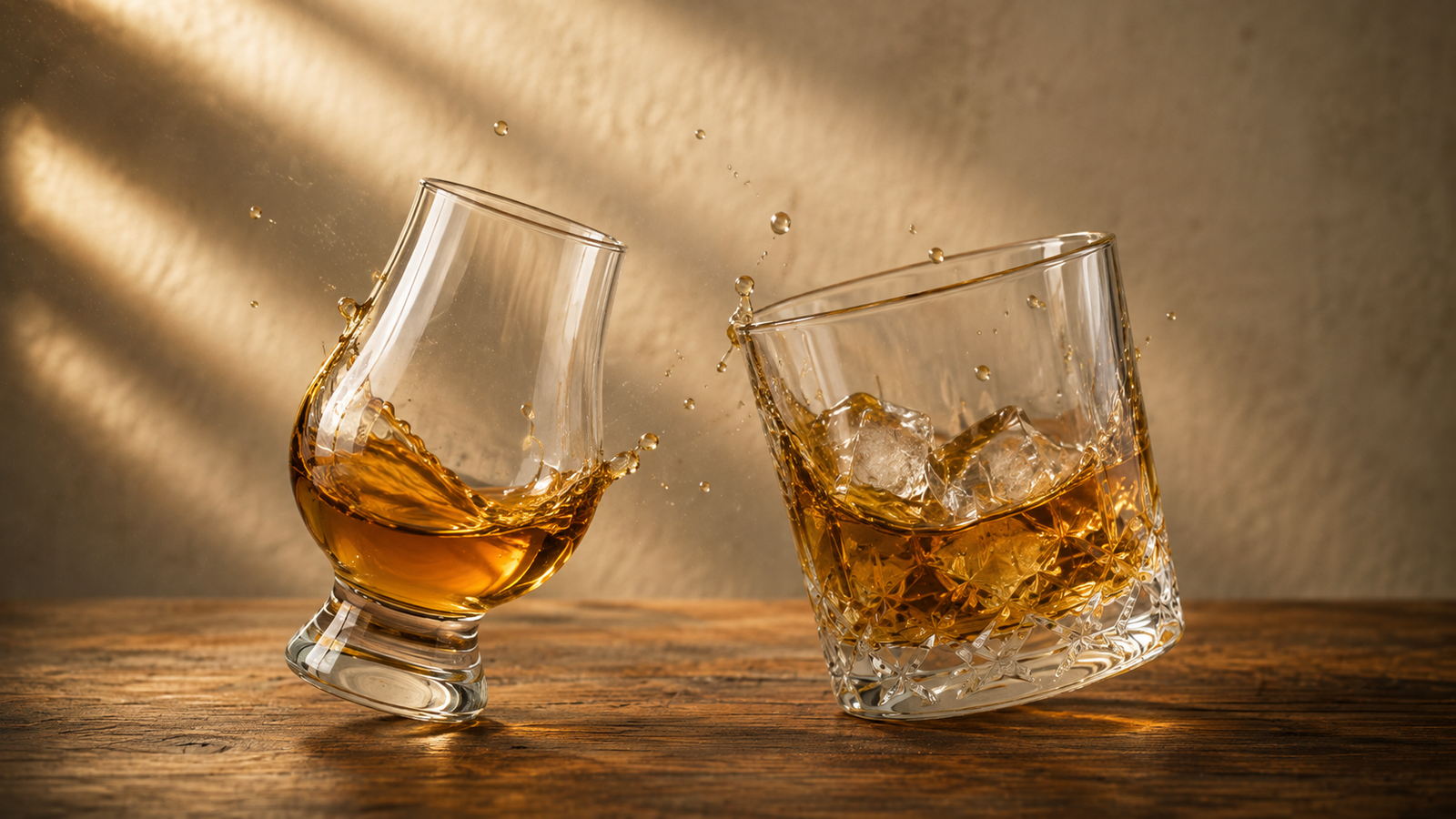
The short answer
Choose a Glencairn-style tasting glass when aroma and comparison are the point. Choose a tumbler when ice, a relaxed grip and an unhurried casual pour matter more. Neither glass is universally better because they are solving different problems.
A practical home bar can reasonably own both: a pair of tasting glasses for focused pours and a small set of rocks glasses for ice, cocktails and easy company.
How the shapes differ
A Glencairn has a bowl that widens above the base and narrows toward the opening. That shape gives the whiskey room to move while directing aroma through a smaller opening. The short solid base also lets the drinker hold the glass without wrapping a hand around the bowl.
A tumbler is broader and more open, usually with straighter sides and enough width for ice. Aroma has more room to disperse, but the glass is familiar, stable and adaptable. Bowl shape and opening size change the way a pour arrives; they do not turn one whiskey into a better whiskey.
For whiskey neat
For a neat pour that you plan to smell carefully, the tasting glass has the advantage. Its narrower opening makes it easier to revisit aromas with small, gentle passes and its bowl gives a modest pour useful visual presence.
A tumbler still works. Use a smaller pour, give it a moment and bring the rim toward your nose rather than burying your face in the glass. If the purpose is conversation rather than comparison, the tumbler may feel more natural.
For whiskey with water
A few drops or a measured splash of water work in either glass. The tasting glass makes before-and-after comparison easier because the concentrated opening keeps attention on aroma. A tumbler offers more room if you prefer a longer drink with a larger addition of water.
Add water gradually. The right amount is the amount that makes the pour more enjoyable to you, not a rule imposed by the glass.
For whiskey on ice
The tumbler wins this assignment. Its wide opening accommodates a large cube or sphere, and its capacity leaves space for dilution without crowding the rim. A tasting glass is not designed around ice and can become awkward when the ice blocks the narrow bowl.
If ice is your usual serve, buy the tumbler first. A glass that fits the way you actually drink is more useful than a technically focused shape left in the cabinet.
For comparative tasting
Use identical tasting glasses when comparing two or three whiskeys. Holding glass shape constant makes it easier to pay attention to differences in the pours instead of differences in rim width and bowl volume.
Identical tumblers can also support a casual comparison. Keep the pours small, skip ice during the first pass and add water in the same increments. Consistency matters more than owning the official-looking tool.
For casual drinking
The tumbler is adaptable, easy to set beside a book or plate and ready to become an Old Fashioned glass when the evening changes direction. It asks less attention and offers more room for ice or a mixer.
The Glencairn is still pleasant for a quiet neat pour. Some people simply enjoy its balance and the way a small measure sits in the bowl. Preference is a legitimate reason when the glass is comfortable and useful.
The sensible two-glass answer
Own two to four tasting glasses if you explore whiskey neat, add water deliberately or host comparisons. Own four rocks glasses if you serve whiskey on ice, Old Fashioneds or short mixed drinks. That is enough range for most homes without turning glassware into a collecting obligation.
If you are buying only one shape today, let the usual serve decide: tasting glass for neat and comparative pours, tumbler for ice and flexibility.