
Cocktail guide
The Six Mother Cocktails
Learn these six families and a crowded cocktail menu starts to look a lot more familiar.
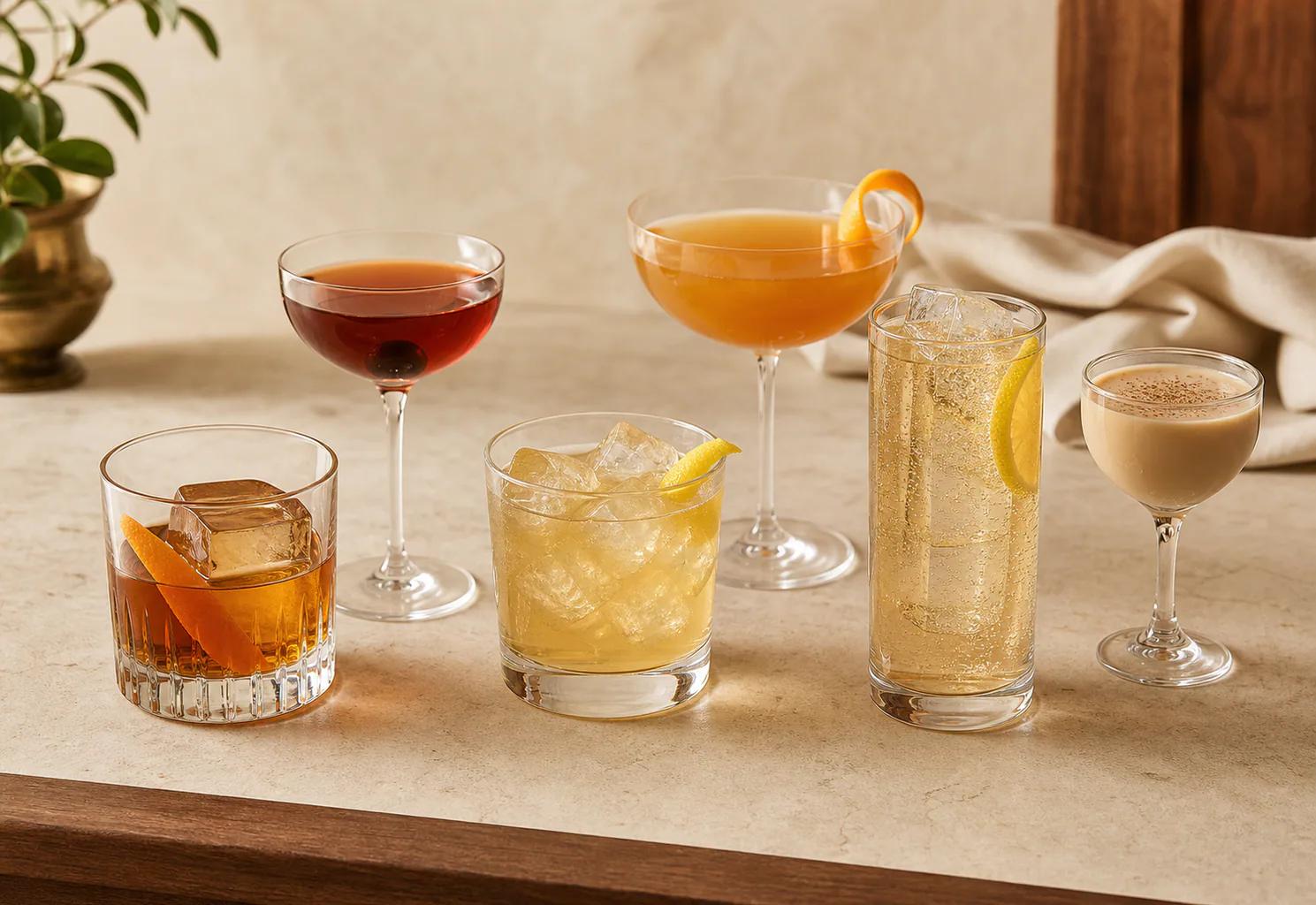
A useful map, not cocktail law
A long cocktail list can make every drink look like a separate assignment. New name, new ingredients, new glass, new garnish. After a few pages, even the confident choices start to blur.
French cooking offers a more useful way to look at the problem. Classical culinary training begins with a small group of mother sauces—not because every sauce in the world fits neatly beneath them, but because a few sound structures make hundreds of variations easier to recognize. Learn what the foundation is doing, and the finished dish stops feeling quite so mysterious.
Cocktails can be read in much the same way. Spirit, sweetness, acidity, bitterness, wine, bubbles, and eggs keep returning in different proportions and combinations. Once you notice their jobs, a Manhattan begins to look related to a Martini, a Margarita reveals its kinship with a Sidecar, and a Whiskey Highball becomes more than whiskey with something fizzy poured on top.
An influential six-root approach was popularized by Alex Day, Nick Fauchald, and David Kaplan in Cocktail Codex. The map here widens a few of those roots into familiar family names. It is a practical modern framework, not cocktail law. Bartenders and writers organize drinks in several ways, the borders overlap, and some excellent cocktails refuse to sit still long enough to be classified.
That is fine. The point is not to memorize a family tree or earn imaginary bartender credentials. It is to understand what the ingredients are doing so you can make a drink with more confidence, compare two versions, and change one part without losing the plot.
The family tree at a glance
These formulas are starting points. Sweetener might mean syrup, honey, or another source of sugar, while wine usually means vermouth but can reach into other aromatized or fortified wines. Think of each card as a question to ask about the glass, not a rule to enforce.
Old Fashioned
- Basic structure
- Spirit + sugar + bitters
- Featured recipe
- Old Fashioned
- Familiar relatives
- Sazerac, Improved Whiskey Cocktail, Oaxaca Old Fashioned
Martini / Manhattan
- Basic structure
- Spirit + aromatized fortified wine, usually vermouth; bitters are common but not universal
- Featured recipe
- Manhattan
- Familiar relatives
- Martini, Martinez, Rob Roy, Gibson
Sour
- Basic structure
- Spirit + citrus + a plain sweetener
- Featured recipe
- Whiskey Sour
- Familiar relatives
- Daiquiri, Gimlet, Bee's Knees, Gold Rush
Daisy
- Basic structure
- Spirit + citrus + a sweet liqueur
- Featured recipe
- Sidecar
- Familiar relatives
- Margarita, Cosmopolitan, Lemon Drop
Highball
- Basic structure
- Spirit + a larger pour of nonalcoholic mixer, usually carbonated
- Featured recipe
- Whiskey Highball
- Familiar relatives
- Scotch and Soda, Gin and Tonic, Cuba Libre, Mule, Ranch Water
Flip
- Basic structure
- Spirit or fortified wine + sugar + whole egg
- Featured recipe
- Brandy Flip
- Familiar relatives
- Whiskey Flip, Porto Flip, Eggnog (a close cousin)
The Old Fashioned
The Old Fashioned is a good place to begin because its ingredients have nowhere to disappear. The spirit remains in the foreground. Sugar softens its sharper edges, bitters add aromatic depth, and stirring supplies the water that brings the whole glass into focus.
That spareness makes the family unusually instructive. Bourbon produces a rounder, sweeter impression; rye tends to bring more spice and a drier finish. Change the syrup or bitters and the drink moves again, even when the measurements stay put. Each adjustment is easy to notice because there is no juice, wine, or soda to cover it.
The Sazerac adds its own bitters and an anise-scented rinse. The Improved Whiskey Cocktail reaches for liqueur. The Oaxaca Old Fashioned changes the base to agave spirits. They travel farther from the original recipe, but the underlying conversation among strong, sweet, and bitter remains audible.
The basic formula
Spirit + sugar + bitters
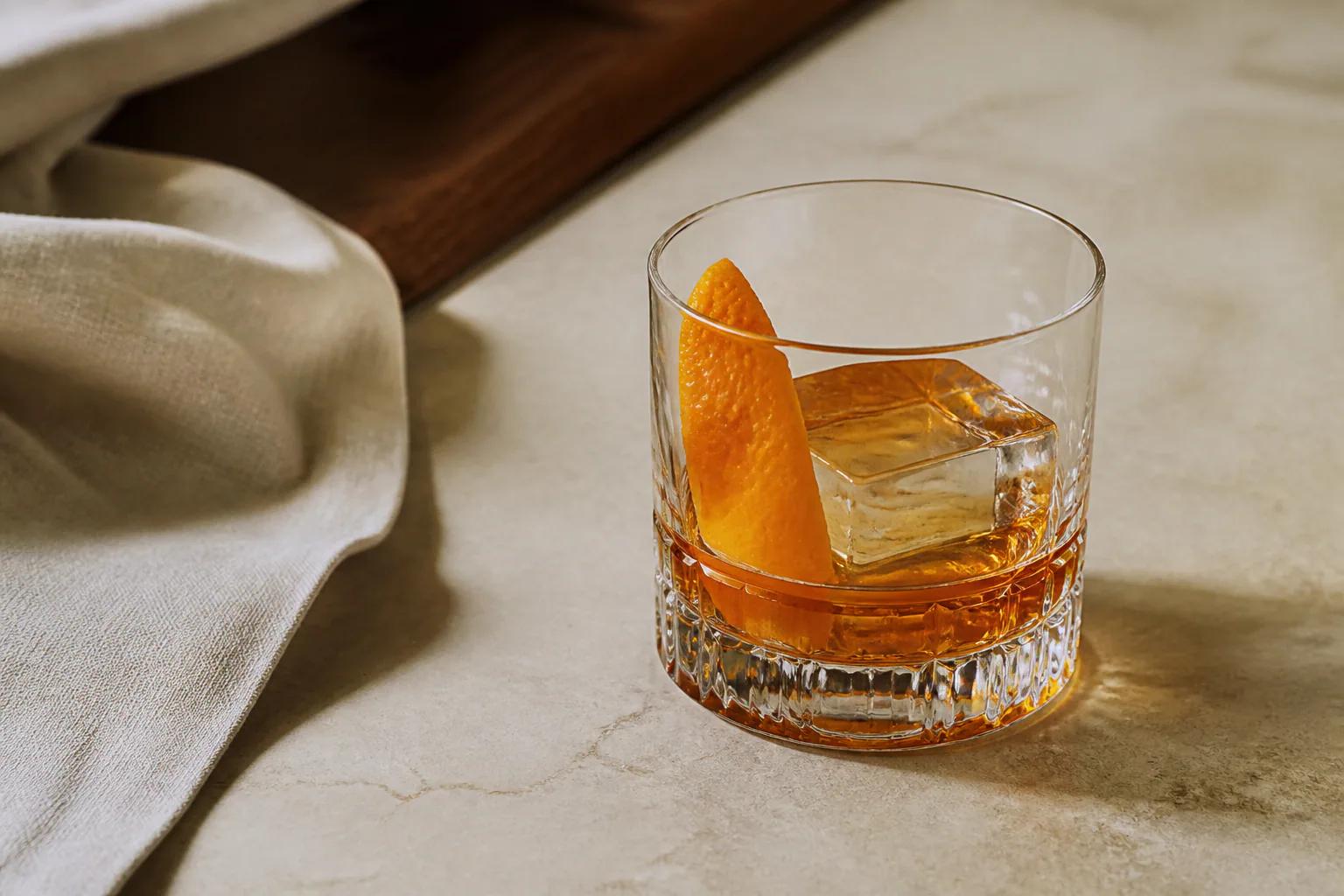
Old Fashioned family · Makes 1 drink
Old Fashioned
Spirit + sugar + bitters
Ingredients
- 2 ounces bourbon or rye whiskey
- 1 teaspoon rich demerara syrup, made with 2 parts demerara sugar to 1 part water
- 2 dashes aromatic bitters
- Glassware
- Rocks glass
- Garnish
- Expressed orange peel
Method
- Add the whiskey, syrup, and bitters to a mixing glass.
- Add ice and stir until chilled and properly diluted.
- Strain over one large cube in a rocks glass. Express the orange peel over the surface and add it to the glass.
Recipe checked against International Bartenders Association: Old Fashioned.
The Martini / Manhattan Family
A Martini and a Manhattan do not taste alike, and no one benefits from pretending otherwise. Their kinship is structural. Both pair a full-strength spirit with vermouth, using the wine's herbs, bitterness, sweetness, and acidity to reshape the base without burying it.
The Manhattan takes the warmer route: whiskey, sweet vermouth, and aromatic bitters. A Martini usually brings gin and dry vermouth together, with orange bitters appearing in many historical versions but not every modern glass. The Martinez leans sweeter and more ornate. A Rob Roy exchanges American whiskey for Scotch. A Gibson is distinguished from a Martini most visibly by its cocktail onion.
This family teaches proportion. A small change in vermouth can move the drink from bracing and spirit-led to softer and more botanical. It also shows why less does not automatically mean better. Vermouth is a working ingredient, not a polite nod toward an open bottle.
The basic formula
Spirit + aromatized fortified wine, usually vermouth; bitters are common but not universal
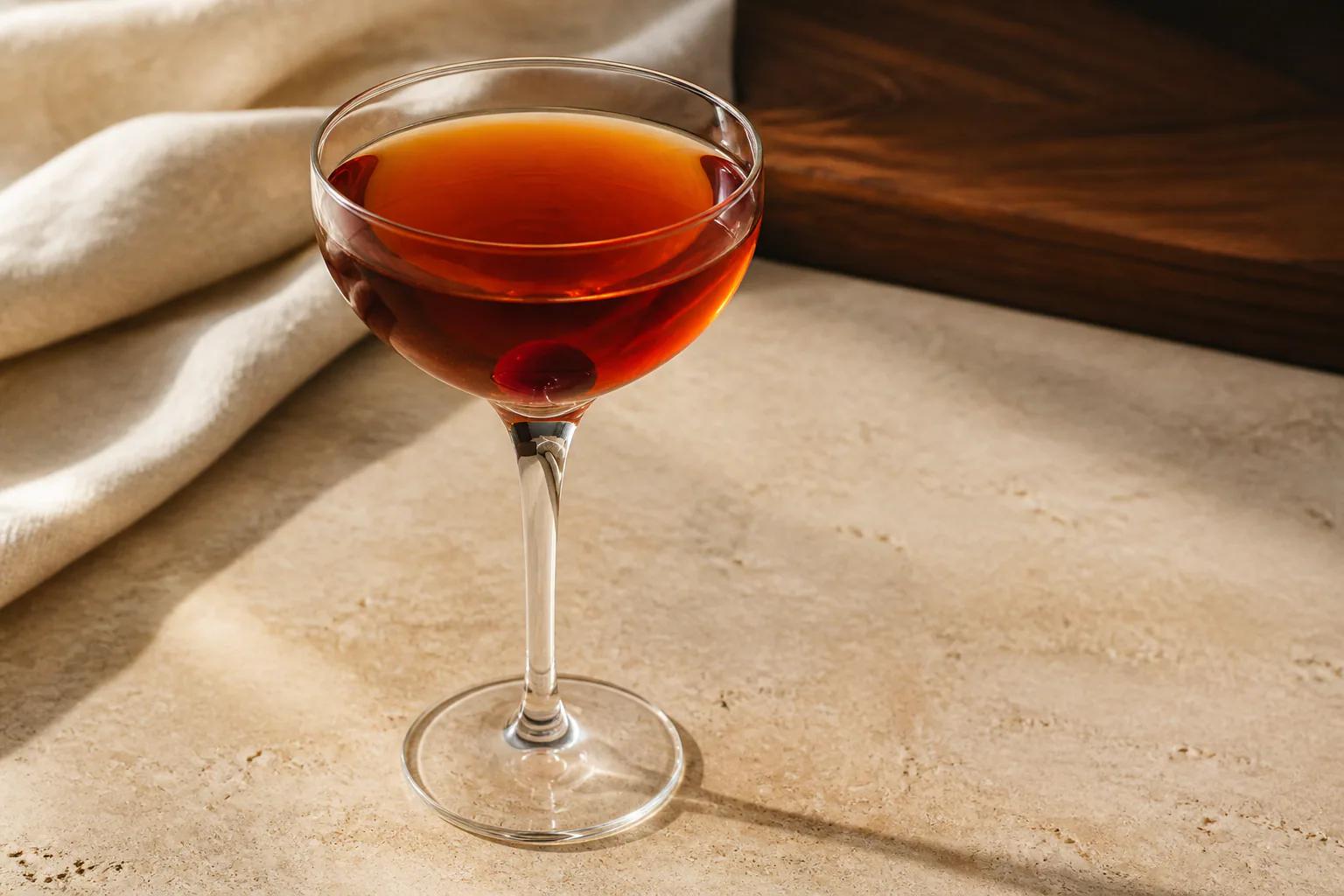
Martini / Manhattan family · Makes 1 drink
Manhattan
Spirit + aromatized fortified wine, usually vermouth; bitters are common but not universal
Ingredients
- 2 ounces rye whiskey
- 1 ounce sweet vermouth
- 2 dashes aromatic bitters
- Glassware
- Chilled coupe or Nick and Nora glass
- Garnish
- Cocktail cherry
Method
- Add all ingredients to a mixing glass with ice.
- Stir until thoroughly chilled and properly diluted.
- Strain into the chilled glass and garnish with a cocktail cherry.
Recipe checked against The Oxford Companion to Spirits & Cocktails: Manhattan.
The Sour
A Sour is a three-way negotiation. The spirit brings weight and character, citrus brings acidity, and syrup rounds the edges. None of the three is trying to win. The drink works when each makes the other two easier to notice.
The family is broad. A Daiquiri uses rum, lime, and sugar. A Bee's Knees uses gin, lemon, and honey. A Gold Rush takes that honey-and-lemon idea to bourbon. The Gimlet belongs nearby, though traditional lime cordial combines the sweet and sour jobs in one ingredient. Family trees get untidy; that is part of their charm.
Egg white appears in some Sour recipes, where it adds texture and foam, but it does not define the family. This Whiskey Sour leaves it out, producing a clear, bright drink over ice. The simpler presentation also makes the balance easy to examine on a first pass.
The basic formula
Spirit + citrus + a plain sweetener
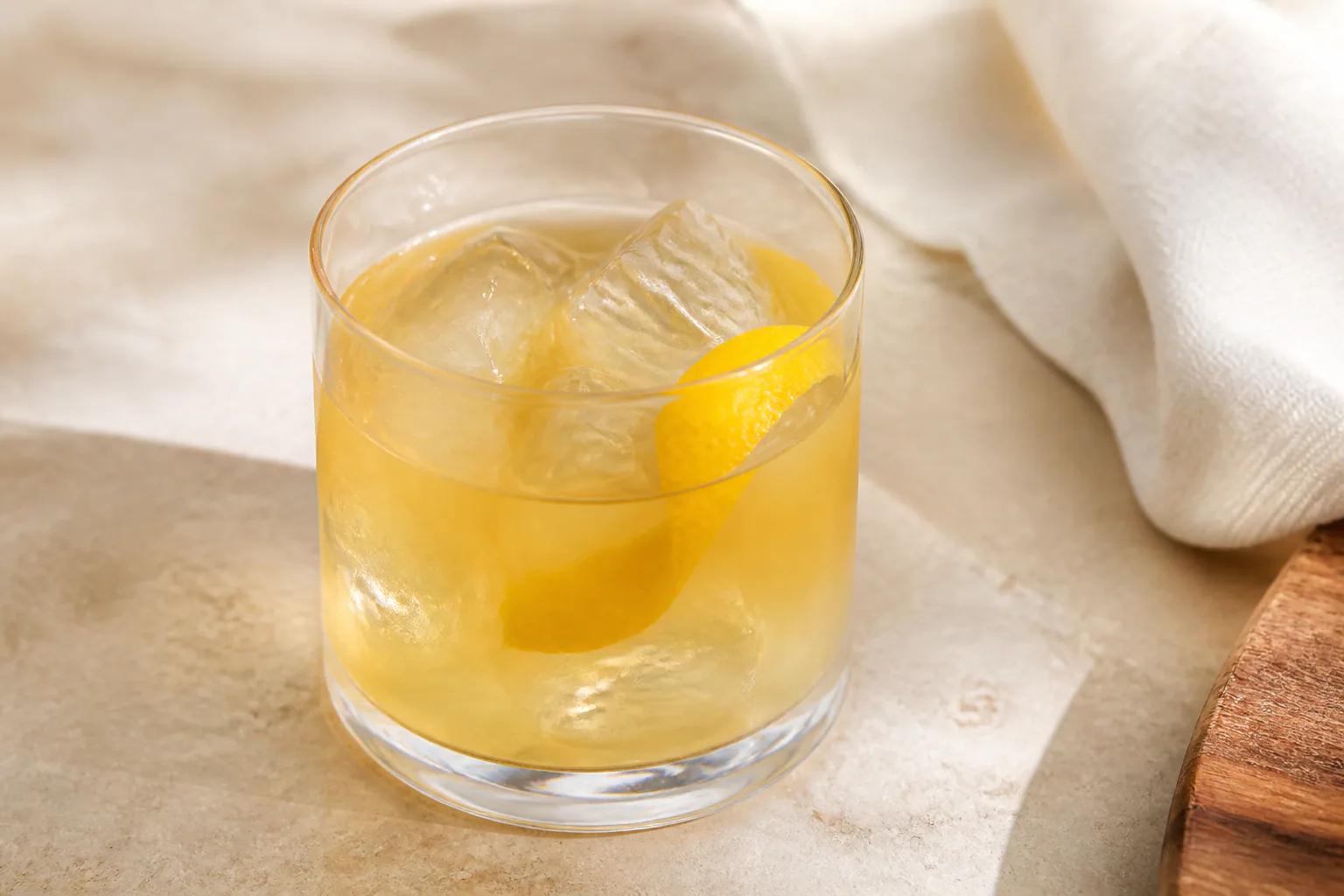
Sour family · Makes 1 drink
Whiskey Sour
Spirit + citrus + a plain sweetener
Ingredients
- 2 ounces bourbon
- 3/4 ounce fresh lemon juice
- 3/4 ounce simple syrup
- Glassware
- Rocks glass
- Garnish
- Lemon peel; a cocktail cherry is optional
Method
- Add all ingredients to a shaker with ice.
- Shake until well chilled.
- Strain over fresh ice in a rocks glass and garnish with a lemon peel. Add a cocktail cherry if desired.
Recipe checked against Bon Appétit: Whiskey Sour.
The Daisy
The Daisy lives next door to the Sour. The practical distinction is the sweetening ingredient: instead of relying primarily on plain syrup, a Daisy asks a liqueur to provide sweetness along with alcohol and another layer of flavor.
That extra job makes balance a little less predictable. Orange liqueurs, herbal liqueurs, and fruit liqueurs do not share one sweetness level, so an even substitution may require a small adjustment after tasting. This is where a formula becomes a guide rather than an answer key.
Historically, Daisies have also included flavored syrups and, often, a splash of sparkling water. Here, the name refers to the shorter Sidecar-style branch represented by the Sidecar, Margarita, Cosmopolitan, and Lemon Drop. Each combines spirit and citrus with a liqueur that changes more than sweetness alone.
In the Sidecar, cognac brings fruit and oak, lemon supplies the sharp line, and orange liqueur connects them. A sugar rim is common but optional; leaving it off keeps the first sip aligned with the recipe in the glass.
The basic formula
Spirit + citrus + a sweet liqueur
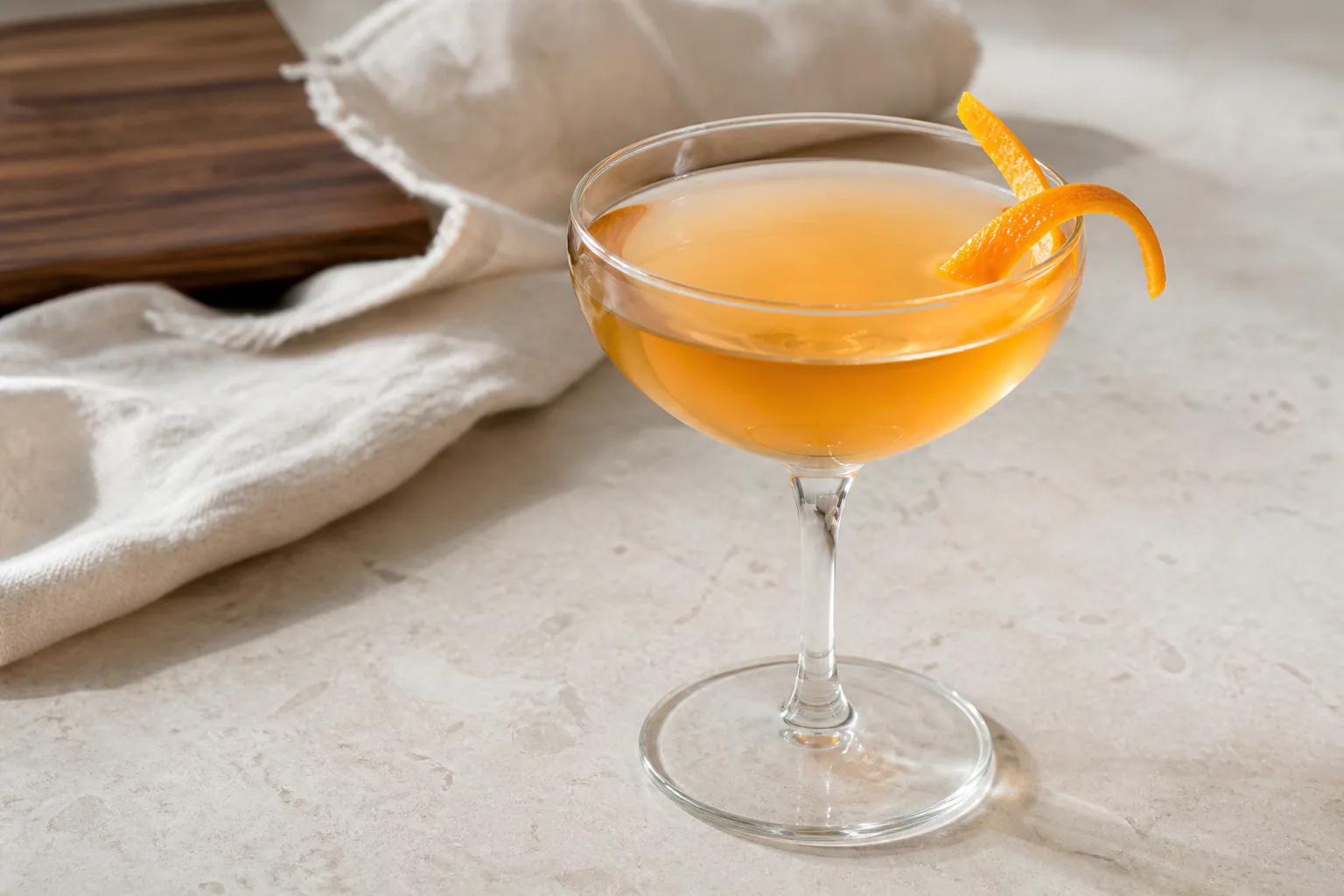
Daisy family · Makes 1 drink
Sidecar
Spirit + citrus + a sweet liqueur
Ingredients
- 2 ounces cognac
- 3/4 ounce orange liqueur
- 3/4 ounce fresh lemon juice
- Glassware
- Chilled coupe
- Garnish
- Orange twist; a sugar rim is optional
Method
- If desired, prepare a light or half sugar rim on the chilled coupe.
- Add the cognac, orange liqueur, and lemon juice to a shaker with ice.
- Shake until chilled, strain into the coupe, and garnish with an orange twist.
Recipe checked against International Bartenders Association: Sidecar.
The Highball
The Highball may be the shortest recipe here, but it is not an afterthought. With only whiskey, soda, ice, and perhaps a peel, temperature and carbonation become part of the ingredient list in everything but name.
Cold glassware, cold soda, and solid ice help the drink stay lively. A slow pour protects the bubbles. One brief stir combines the layers without knocking the life out of the soda. Those details explain why two drinks made from the same bottles can arrive with very different energy.
The larger family includes Scotch and Soda, Gin and Tonic, Cuba Libre, the Mule, and Ranch Water. Some bring sweetness, citrus, or spice along with the bubbles, but all use a nonalcoholic mixer to lengthen a spirit into a tall, refreshing drink.
A range of four to six ounces of soda lets the glass and the whiskey have a say. Start with four for a more concentrated drink, then add more if a longer, lighter version suits the moment.
The basic formula
Spirit + a larger pour of nonalcoholic mixer, usually carbonated
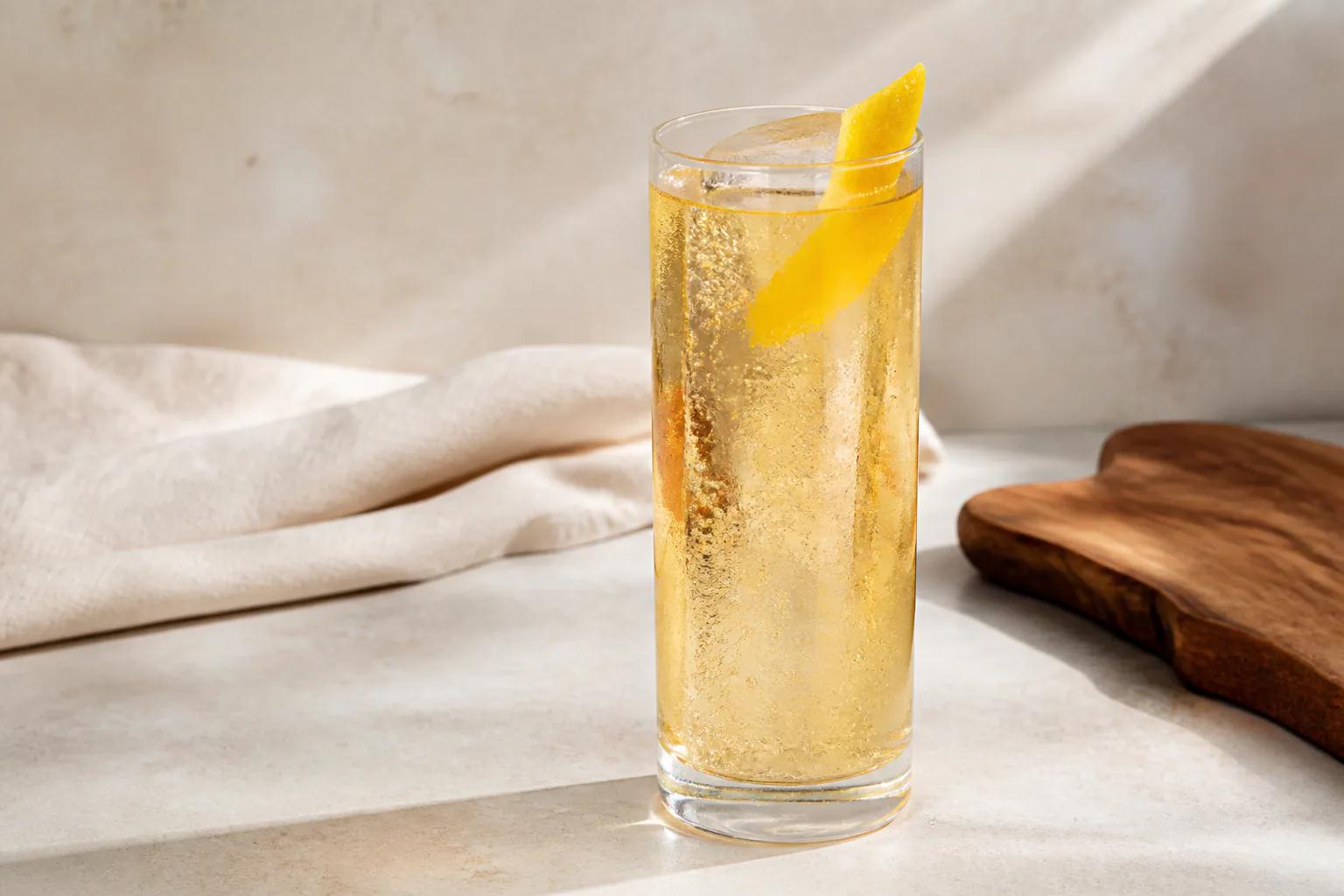
Highball family · Makes 1 drink
Whiskey Highball
Spirit + a larger pour of nonalcoholic mixer, usually carbonated
Ingredients
- 2 ounces whiskey
- 4–6 ounces very cold soda water
- Glassware
- Chilled highball glass
- Garnish
- Lemon peel, optional
Method
- Fill a chilled highball glass with clear ice and add the whiskey.
- Top slowly with 4 ounces of soda water.
- Stir once or twice without flattening the carbonation. Add up to 2 ounces more soda to taste and garnish with a lemon peel if desired.
Recipe checked against Liquor.com: Whiskey Highball; O'Shaughnessy Distilling Co.: Highball.
The Flip
A Flip is the family that makes the shaker work for its living. Unlike a Sour that uses egg white for a cap of foam, a Flip includes both white and yolk. The whole egg gives the drink a smooth, substantial texture without requiring cream.
The dry shake begins the emulsification before ice is introduced. A second shake chills and dilutes the mixture, while double-straining catches stray ice and helps the finished surface stay even. Freshly grated nutmeg contributes aroma before the glass reaches the lips.
Brandy makes a natural base, but whiskey and fortified wines work well too. A Porto Flip brings port into the structure. Eggnog is a close cousin rather than a strict member of the family because it also includes milk or cream.
This is a drink to make deliberately and serve promptly. It is also the one recipe in the group where ingredient safety deserves its own clear pause.
The basic formula
Spirit or fortified wine + sugar + whole egg
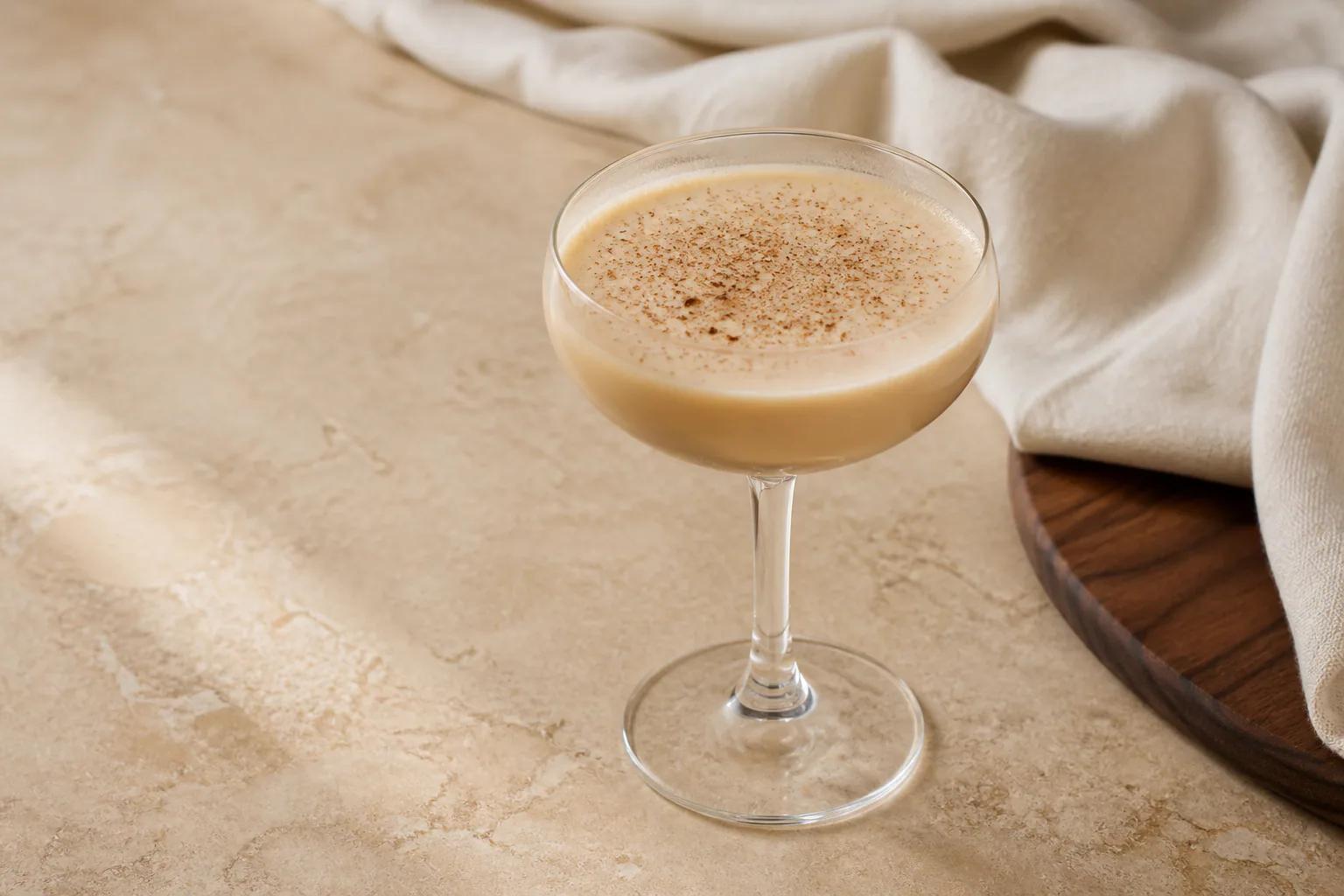
Flip family · Makes 1 drink
Brandy Flip
Spirit or fortified wine + sugar + whole egg
Ingredients
- 2 ounces brandy
- 1/2 ounce simple syrup
- 1 pasteurized whole egg
- Glassware
- Chilled coupe or small stemmed cocktail glass
- Garnish
- Freshly grated nutmeg
Method
- Add the brandy, syrup, and egg to a shaker and shake vigorously without ice.
- Add ice and shake again until thoroughly chilled.
- Double-strain into the chilled glass and grate a light layer of nutmeg over the surface.
Recipe checked against The Oxford Companion to Spirits & Cocktails: Flip; U.S. Food and Drug Administration: Egg Safety.
One classic, then one change
These six families do not shrink the cocktail world. They make it easier to enter.
Once you can spot the structure, a menu becomes less like a wall of proper nouns and more like a set of variations. You can see when a drink will be spirit-forward, when citrus is carrying the conversation, when a liqueur is doing more than sweetening, and when bubbles or eggs are responsible for the texture.
The most useful next step is small. Choose one recipe and make it as written. Then make it again with one thoughtful change: rye for bourbon, honey for simple syrup, apple brandy for cognac, ginger ale for soda. Taste the two versions beside each other, preferably with someone willing to compare notes without turning the evening into an exam.
You do not need the approved answer. Notice what changed, decide which direction interests you, and keep the measurement that got you there. That is the practical value of a family tree: not memorizing every branch, but knowing where you might like to climb next.
Sources and further reading
Key factual details and recipe structures were checked against these references.
- Cocktail Codex by Alex Day, Nick Fauchald, and David Kaplan
- Institute of Culinary Education: The Mother Sauces and Their Offspring
- International Bartenders Association: Old Fashioned
- The Oxford Companion to Spirits & Cocktails: Manhattan
- The Oxford Companion to Spirits & Cocktails: Sour
- The Oxford Companion to Spirits & Cocktails: Daisy
- Bon Appétit: Whiskey Sour
- International Bartenders Association: Sidecar
- The Oxford Companion to Spirits & Cocktails: Highball
- Liquor.com: Whiskey Highball
- O'Shaughnessy Distilling Co.: Highball
- The Oxford Companion to Spirits & Cocktails: Flip
- U.S. Food and Drug Administration: Egg Safety